
I finished this book with my feet in Landon’s lap while he watched the Bears lose to the Rams, oblivious to the enormous tears streaming down my face. When I finally closed the book jacket, he glanced up — “Jennie!” he said, surprised, and then not. (Not his first time witnessing my distress after finishing a good book.) I told him and the several friends I texted from my puddle-like state, “I’ve just finished The Correspondent, and I’m unwell.” (Everyone responded with versions of: “me, too.”) This is a book that sends you off on heart strings.
Let’s get into it.
The Correspondent is a heart-felt and gut-wrenching epistolary novel in which an older woman named Sybil, who has carried grief the size of Texas for decades since her second child died at the age of eight, surprises herself by opening her heart and finding connection in the sunset years of her life. There is a familiar “Man Called Otto” texture to it, especially in Sybil’s comedic-curmudgeonly dealings with the garden committee and various “letters to editor,” and yet Sybil is her own woman with her own rich history and sense of place and person, and she comes to such rich insights about herself that it is impossible not to open the heart to her.
Here is the thing, though: after reading this, I called my mother (who’d read this book months ago) and told her: “I just don’t think I can read any more books about child loss.” This, and Hamnet before it, sent me into such a deep state of sadness that my world tinged blue. Perhaps this is the point. And any round reaction to art (positive or negative) is a beautiful thing, an avowal of the medium’s power and the text’s quality. So, yes, the book put me straight in my own motherhood for the days following. Gill crying “watch me” is just about as painful a line as I’ve ever read. I carried this around with me for days, straining to truly listen to my children. Which is of course how we all hope to be all the time but is not my personal reality, leading to the painful brand of guilty navel-gazing to which I am prone. (Even sitting here, I feel sick about expediting my son this morning. He’d just received a missing lego piece he’d sent out for three weeks ago and was desperate to work on his Ninjago set after a multi-week hiatus, and yet there I was, warden of the morning, interrupting his plans. He did have to go to school, but could I have been gentler; could I have played the advocate rather than the adversary?)
Anyway — it’s not that books can’t write about this theme. They can, they should, they must. But there was something about the way in which the character died, and the death’s placement in the novel, that felt — I don’t know. Gratuitous? Manipulative? I had a difficult time with it. It reminded me of the part in the book where Sybil writes to the newspaper excoriating them for running a story about a child being killed; she is saying “this is gross! this is ambulance chasing! can you imagine the parents?!” And she is obviously writing from her own place of grief. But in some way I felt this about the book, too — misery lit.
I’m aware that this critique reveals my own triggers and heart wounds, and says a lot more about me than anything else; if anything, it demonstrates vigorous thematic efficacy. Writing this, I think: I can take better care screening the books I’m about to read knowing that I am particularly sensitive to this subject. (In the past, I’ve fastidiously avoided any critical literature about a book and try to dive in knowing almost nothing. I like that fresh play-dough pliability when reading. But perhaps this must change.) One of my siblings lost a child, and there are several Magpies who have lost children, too, and so I read these books with them heavy on my mind and heart. It is as though they are reading over my shoulder. Maybe books like these are a bridge for those parents — to feel seen, to feel understood — but then why would Evans write the death this way, such that the mourning parent was made to feel complicit? (I am wringing my hands.) I feel that a similar outcome could have been achieved (Sybil rising!) without the devastation she presents in this version of the novel.
But let me set that aside. Let’s talk about the epistolary form. Ann Patchett apparently said something along the lines of “epistolary novels rarely work – but this one does.” I agree; the form echoes the theme by centering the exchange that underlies every relationship — a lesson Sybil gradually accepts over the course of the novel. She has spent so much of her life drawing inward, and here she is, learning to open her palms and wait for someone to fill them. The letters artfully perform the ping-pong of friendship, the call and reply, the pauses that invite speculation, the immediacies that court intimacy. Evans does such a clever job of using the form to point an arrow at this part of building and maintaining relationships. And it is life-affirming, to see Sybil casting out for contact, and ultimately finding it by the novel’s end. (Connection is waiting for us everywhere! In the relationships gone fallow, in the distant relations in our family trees, in the neighbors who look out for us. We must cast out!) I also found the form an effective way to pass narrative time at a galloping, then slow, then galloping pace. She didn’t have to insert any “yadda yaddas”; the letters simply showed up with the date on them, and that was that. This lent the book a wonderful propulsiveness. My critique of the form, though, was that I found the voices sounded too similar to one another; Harry and Rosalie and Sybil and Theodore ventriloquized by Evans. All of them shared a cadence, syntax, and improbably high self-awareness. But, this is punctiliousness; in general, I thought the structure worked beautifully and made for fun reading, further heightened by the cameos of Joan Didion, Larry McMurtry, etc. (I found myself actively stressed for Evans as she performed Joan Didion — that is a tall order.)
Overall, I found the book deeply moving and well-formed; the mid-Atlantic setting and the birds on the cover only deepened my connection, too.
What did you think?
The Correspondent Book Club Questions.
+What did you make of the epistolary form? (I share some thoughts, mainly from a narrative design standpoint, above, but what else might Evans be saying about letter-writing and self-expression?)
+Sybil is an accomplished attorney. How did this shape your reading of her character and her story? (Why would Evans choose this career for her?)
+How did Sybil’s relationships with her ex-husband and children evolve over time (if at all)? What did you make of those relationships as they began and ended in the novel?
+Sybil is losing her vision over the course of the book. How did this impact the story and its telling? Why was this an important element of Sybil’s experience at the end of her life?
+What did you make of Sybil’s relationship with Harry? How did this affect the plot / Sybil?
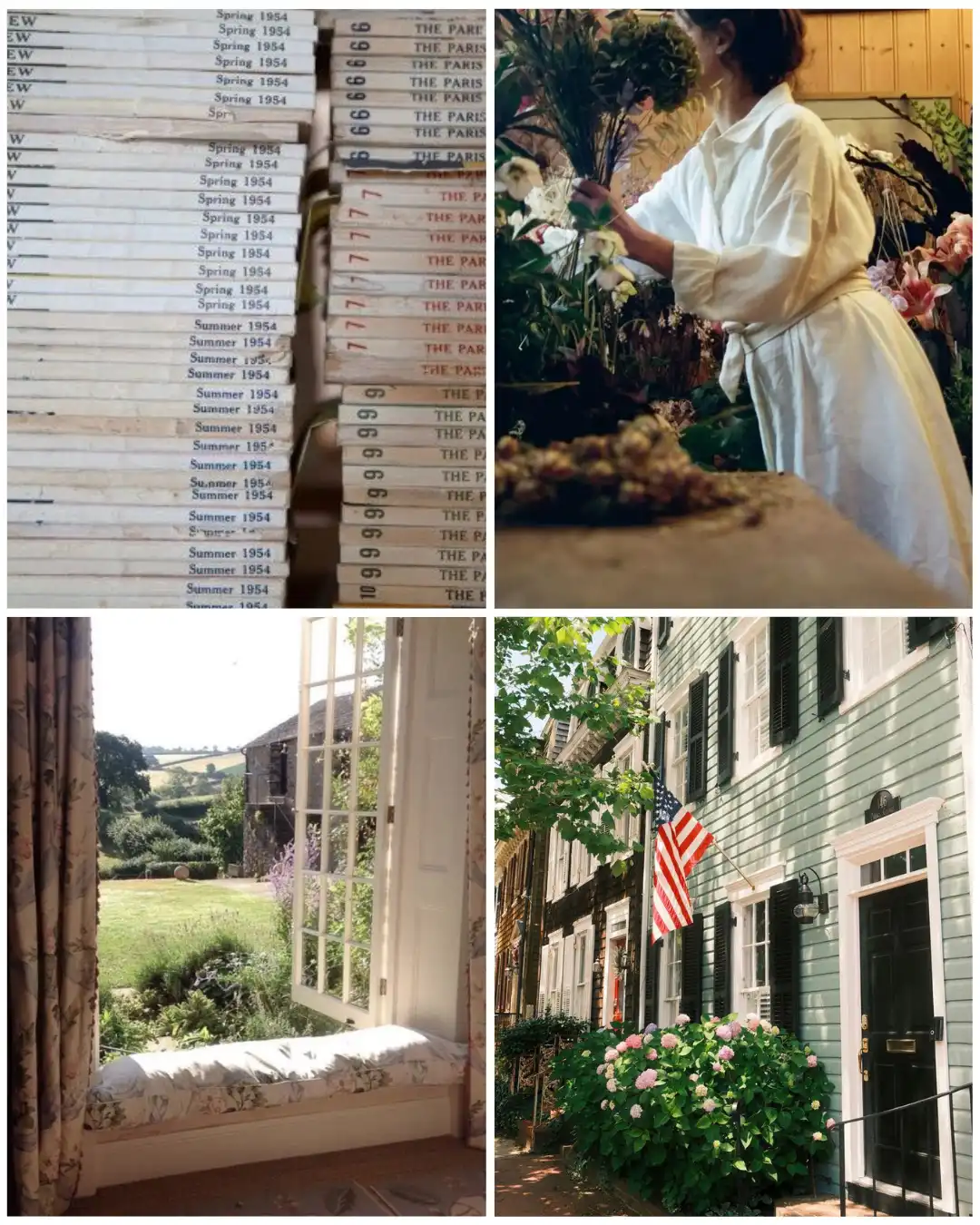
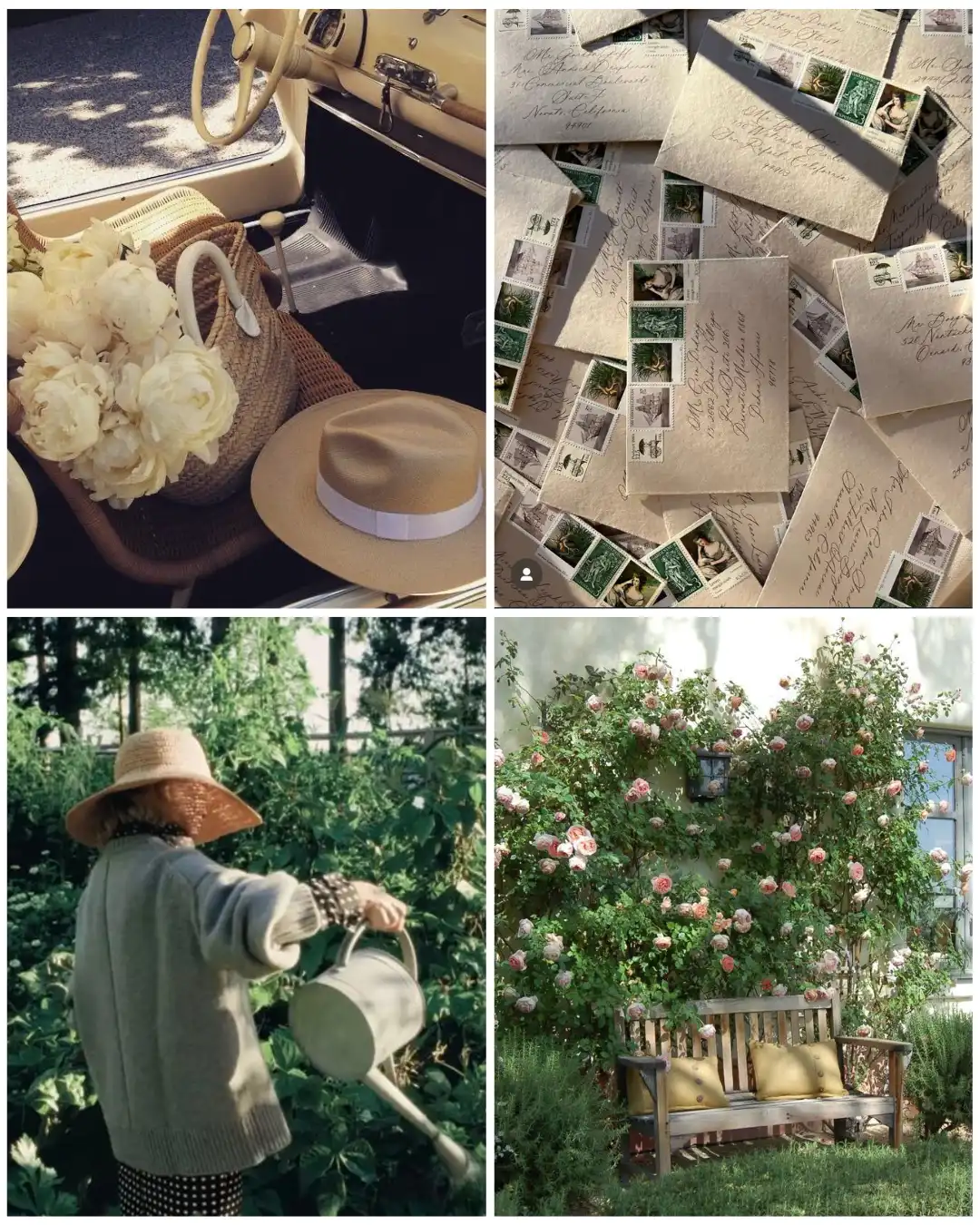
The Correspondent Mood Board.
Deeda Blair vibes, but less formal and fussy.
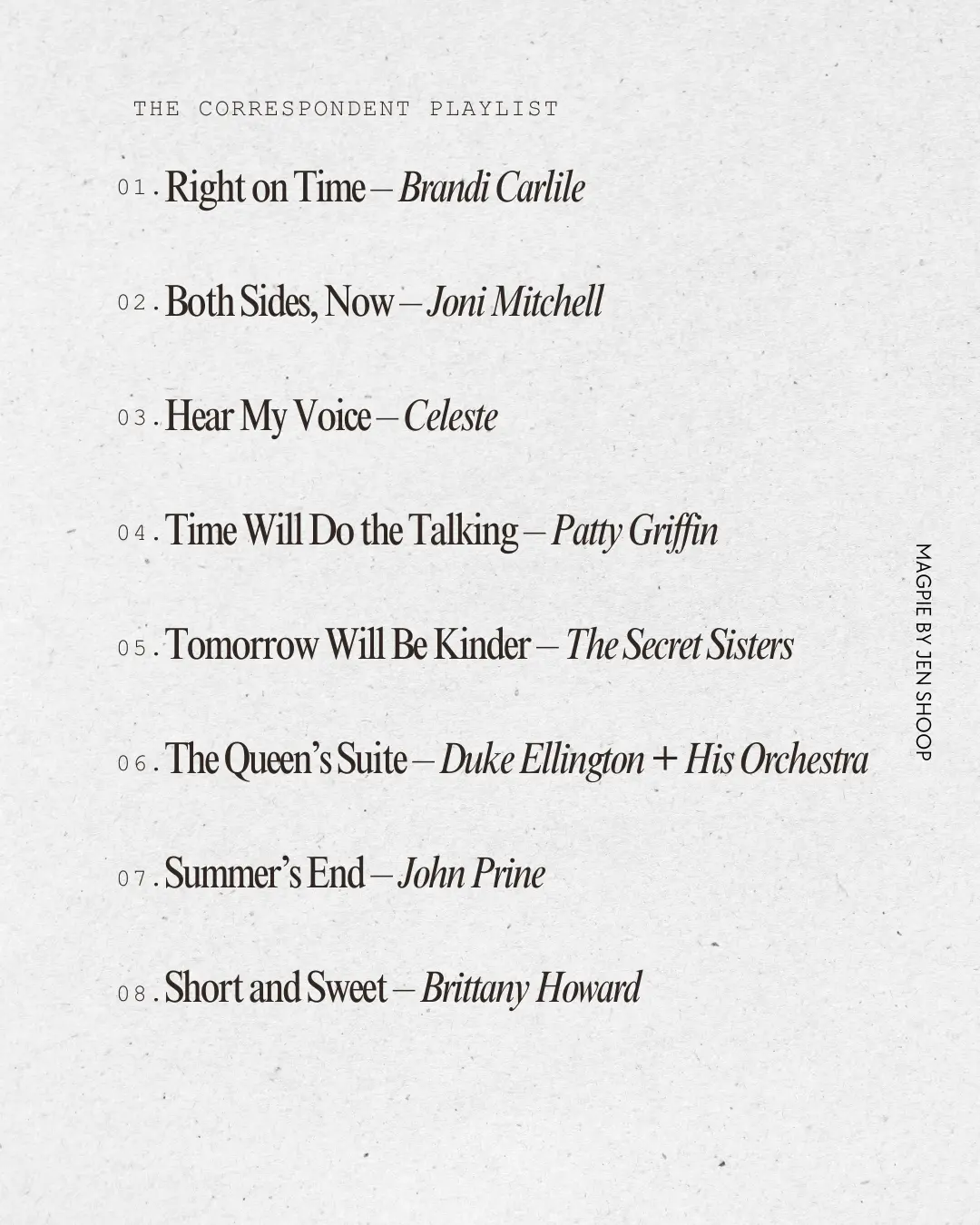
The Correspondent Playlist.
This was a tricky playlist because when I thought about music to accompany this book, I mainly thought of piano-forward cinema scores, with designated musical larks to accompany each character, along the lines of what Jack Black’s character in “The Holiday” writes for Arthur, etc. But then I thought also of plaintive ballads, songs searching for things lost, tunes for memories. And this is what I came up with! A perfect soundtrack for getting into your feels, beginning with “Right on Time” — whooooweeee, if that track doesn’t send a shock right to the heart, I don’t know what does. “It’s not too late / Either way, I lose you in these silent days / It wasn’t right / But it was right on time.” Wow, wow.
You can listen HERE on Apple and HERE on Spotify.
The Correspondent Dream Casting.
This will be made into a movie, yes? Helen Mirren for Sybil? I know Theodore is meant to be German but I kept imagining someone like Tom Skerritt — down-to-earth, gentle noticer. Or maybe a Liam Neeson? Who were you envisioning?
Inspired by The Correspondent.
The items below feel Sybil-coded — especially of course the Smythson letter paper! Are we all ordering a packet and a personalized notebook? (I feel like she’d write with a gold Cross pen — my mom has one!)
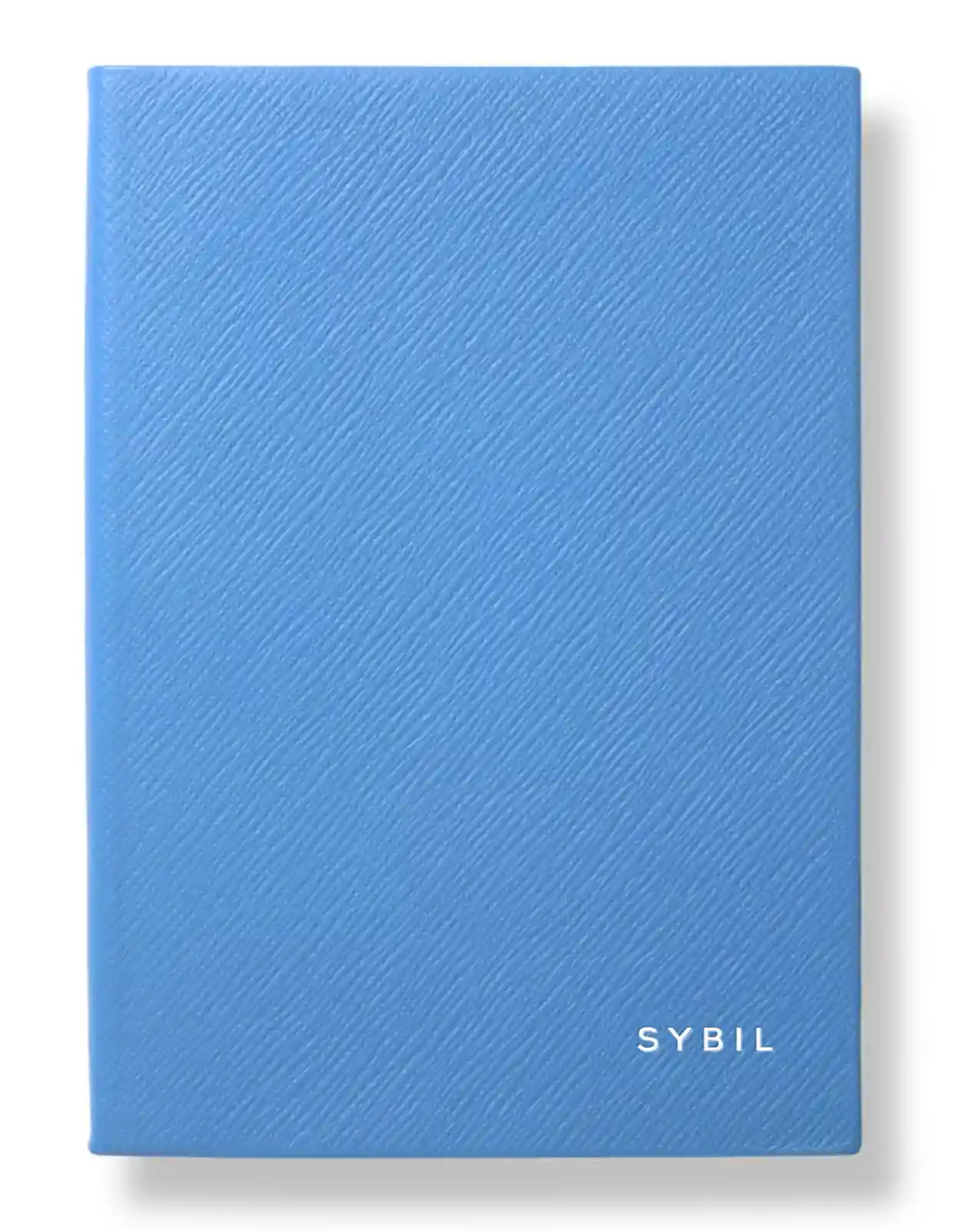
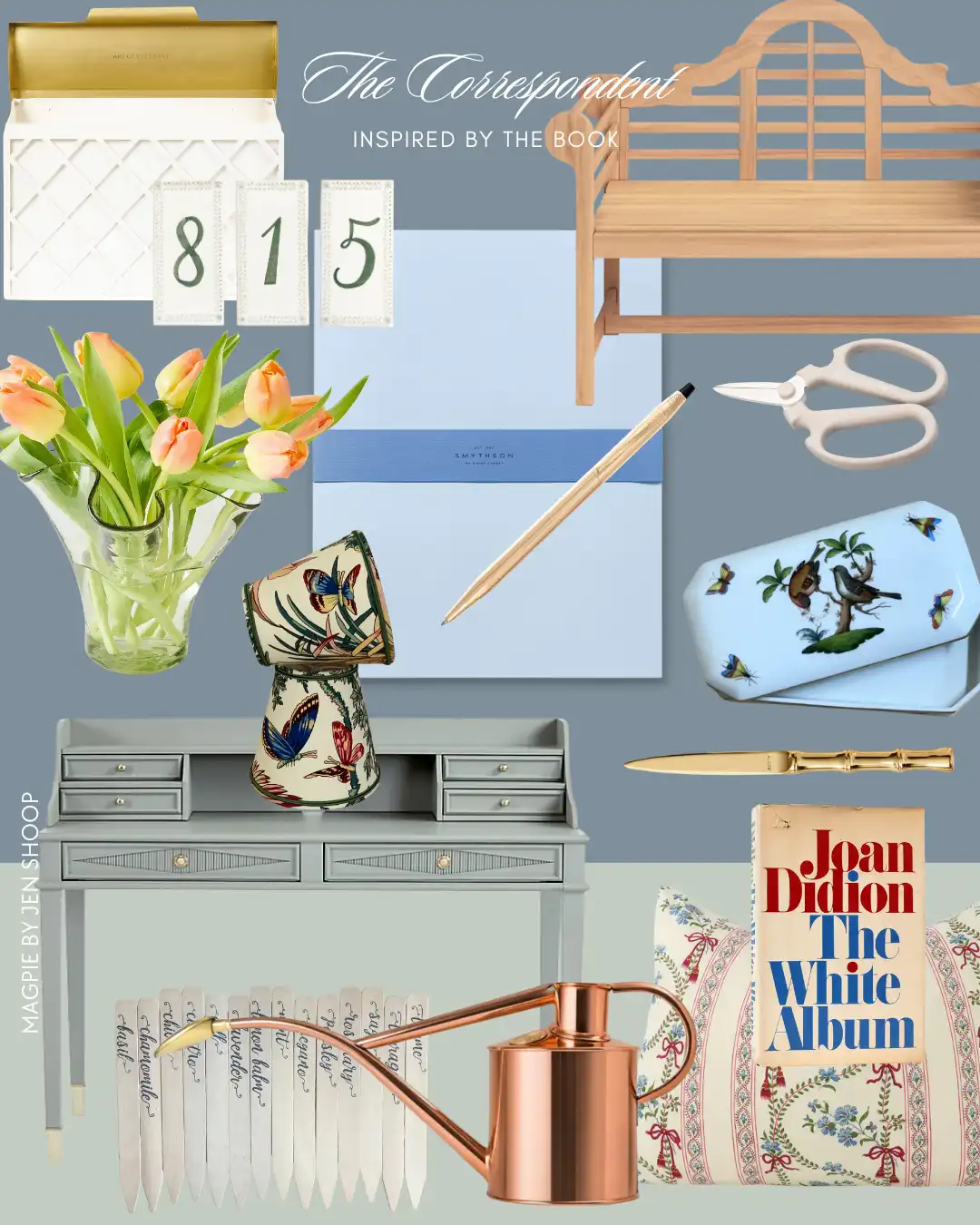
TRELLIS LETTER BOX // PORTUGUESE HOUSE NUMBERS // HALF PAST SEVEN LETTUCE LEAF VASE // SMYTHSON LETTER PAPER // CROSS GOLD BALLPOINT PEN // TEAK OUTDOOR BENCH // FLORAL SCISSORS // HEREND TRINKET BOX // AERIN BRASS BAMBOO LETTER OPENER // PIERRE FREY LAMPSHADES // BALLARD DESK // CURSIVE GARDEN STAKES // HAWS COPPER WATERING CAN // THE WHITE ALBUM // PIERRE FREY PILLOW //
I also feel like Sybil would have shopped (in person) at Ann Mashburn, don’t you? This peony pink cardigan and this lady jacket would be as chic at 25 as they’d be at 85.
Quick aside: you all have been loving this Ann Mashburn poplin shirt (on sale) and went crazy for this wrap sweater from yesterday’s Tuckernuck roundup.
Our February Book Club Pick: The Original by Nell Stevens.
This was a very difficult choice for me. I’d initially planned to propose something different this month — Kokun: The Girl from the West by Nahoko Uehashi, an ecological fantasy “where two girls must unlock a forgotten power to save their world from collapse.” (I thought these comparisons were interesting: reviewers compared the writing to “Rachel Carson’s lyrical descriptions of nature” as well as “the court intrigue of Game of Thrones.”) I even emailed a few of you listing this as next up in the queue, but then I read a really compelling review of The Original by Nell Stevens and couldn’t help myself; I ordered it and am anxiously awaiting its arrival. This is a historical fiction set “in a grand English country house in 1899,” where “an aspiring art forger must unravel whether the man claiming to be her long-lost cousin is an impostor.” It sounds exciting and clever. So let’s read this and I might also side-car Kokun and publish a double review next month.
Other books I’ve been hearing quite a bit of buzz about: Dandelion Is Dead by Rosie Storey and Lost Lambs by Madeline Cash.
What else are we reading?
*I’m keeping this virtual TBR pile updated as I hear about exciting new releases for 2026.
P.S. Tiny rescues.
P.P.S. On maintaining wonder as a parent.
P.P.P.S. Which books changed your life?
Magpie promo codes here + my recommended products here. You can preorder my book, Small Wonders, here!
This post may contain affiliate links. If you make a purchase through the links above, I may receive compensation.

I am not brave enough to read this. Anything related to child loss or cancer is off limits to me. At this stage in my life, I have to protect my peace.
I’m glad we could serve as a trigger warning for you!!! I really had not heard anything about this aspect of the book before diving in and it totally caught me off guard.
xx
It’s funny, Jen, I tend to agree with Leah that for me this book did not FEEL like it was ABOUT child loss — and yet, I admit, this could be a coping mechanism on my part. I feel like I saw the loss of her child almost as a….convenient literary convention?…and read it as such. Like, okay, the Protagonist needs something traumatic she’s going to reveal to us over the story. And it needs to feel BIG. I felt the same way about her loss of vision. Okay, the Protagonist needs a “clock” something she is losing, so there are more stakes to “resolving things” before her health declines. This is perhaps the disadvantage of revising on my own novel relentlessly at the moment, reading with this distance.
I really appreciate this review though because I just mailed it to my friend and told her it was a light, delightful epistolary novel that I tore through. And that was true for me! But apparently! That is NOT everyone’s take. I do now wonder if I am SO armored up that when I read about child loss in fiction I am *constantly* and subconsciously reminding myself that it is fiction—just fiction—so I don’t let myself feel deeply the way you and many other lovely women in the comments do. I salute you for opening your heart to the feeling. Onward 🙂
Hi! Thanks so much for jumping in here and sharing your thoughts! It’s so fascinating to follow our different take-aways. This only underscores the strength of the book and also the way in which we all co-create the texts we read. Clearly my reading hinged on an exposed nerve, you know? But I also agree with your thoughts on the plot points as literary conventions. The same thing with the letter-writing — all in service to the book’s themes of redemption, connection. Things lost in translation, things recovered through it.
I would like to develop more reading armor, I think! I am so, so sensitive!!
xx
I also described it as light and heartwarming, not really internalizing the child loss at all. It almost felt like there was a slight distance to her grief and that while sad there was a layer between it and me as the reader. I think because we’re reading her grief as filtered through letters it allowed me to detach a little. If it had been a first person exploration that might have changed it for me but regardless I never really thought about that aspect and find it fascinating how it impacted so of us and not others.
I did cry at the end of the novel, on the wooden bleachers at the rec center while my daughter had swim practice. A little awkward wiping my eyes surrounded by other parents!
This is so fascinating! Thanks for sharing this alt read. Helpful to me actually. I’ve been in such a blue state since reading it, and this feels like a lightening for some reason.
I think we all agree it was captivating! I couldn’t put it down once I was underway!!
xx
I do not read books about child loss, but I read The Correspondent, and though I sobbed, I loved it. I would describe this book as a character study, and while losing her child was undoubtedly the most significant event of Sybil’s life, we also witness her growth and redemption, and even her humor. I think both the book and Sybil herself are too broad and multi-faceted to be reduced to being “about child loss.” (Not to undermine the significant trigger warning that should of course accompany this book.)
I agree with this, Leah, and this is why I think the book would have been even stronger if the death of the child had been handled / conceived of differently. For me, it ended up overwhelming the novel, but there was so much else — so much meat on the bone! The relationship with Theodore! The recovery of her strained relationship with her daughter! The loss of her sight! The reconnection with a hidden sister; her grappling with being adopted. There was just so much and, I agree, a lot of growth and complexity in those areas, too.
xx
I finished last night and immediately crawled in bed next to my 7 year old son just to breathe him in for a minute. I tore through this book, but wow what a heartbreaker.
Heartbreaking! I did the same thing. I took my son out for solo time the next morning too.
xx
Have you ever heard Gordon Lightfoot’s old song “If you could read my mind?” That was playing in the background of my mind after I finished this book and the line something like “Wouldn’t read that book again because the end was just too hard to take” perfectly captures how I felt about this one. I couldn’t agree with you more on ‘misery lit’. I fell for a recommendation that this is a book where nothing much happens except several letters back and forth from an aging woman. I should have known better and done my usual google search before any new book “[title] child loss”. But i didn’t this time, so I had to close the book at that part and later let my eyes run ahead over the accident scene. Thankfully i did my google search for Hamnet and will absolutely avoid that one at all costs. I wish I could steel my heart against these things to be able to appreciate the art as it is, but torturing myself to be able to participate in a conversation isn’t a good enough reason anymore. All that said, I also didn’t like Sybil. I found her harsh letters to the editor and ugly persona at garden club to be at odds with her training as an attorney – despite the overused stereotypes, we are a profession of relationships, nuance, details, and perspective!
Thanks for your thoughts on this! I was honestly a little worried my comment about the book being “misery lit” may have been too harsh — I woke up last night and wondered about it. Was it fair of me to cast it in that light? But your note here reminded me that I was writing truthfully about my response to the text — and it sounds like you and others felt the same.
I found Sybil’s fiery/stern letters to the editor and initial rejection of Mick a little affected, too — but I think Evans was trying to cast her as this stuck-in-her-ways curmudgeon, that time had hardened her, and we see her change quite a bit, recover from those gaffes in various ways, etc. But yes, maybe there were a bit overdrawn. Some of them felt too comedic/droll/twee, and at the expense of the text’s otherwise earnest tone.
Thanks for sharing, Elizabeth —
xx
I agree with you, I don’t think I can read Hamnet in this season of life, and I read several spoiler-y trigger warnings before beginning the correspondent. I wound up sobbing while my kid watched Magic Schoolbus next to me!
I don’t think you should read Hamnet either! And thought I absolutely love the cast, vibe, etc of the movie, I just can’t permit myself to watch that either, I think!
Your description of you sobbing while Landon is watching football gave me such a giggle. I guess it’s a familiar scenario as that’s exactly what played out in my home last Monday night. My husband was watching the Indiana/Miami game while I was nearing the finish line of Wally Lamb’s, The River is Waiting. (Do NOT read this book for all the reasons you state above!) From start to finish, this book involves the reader in some very painful experiences. Nightmarish! Still, I’m glad I read it. I’m in need of some cleansing follow-ups and true to your form, you’ve come to the rescue! I’ve ordered both of the books you’ve suggested. Thank you, Jennifer!
So funny that we shared that exact experience!!! Well, at least we were in good (warm) company even if they were ignorant to our exact heartache!
Yes, looking forward to a palate cleanser!!